Research Article
Aim & Scope
Hittite Journal of Science and Engineering is an international, peer-reviewed, multidisciplinary, periodical journal containing original research papers and review articles in English.
Research Areas/Subject Categories:
- Engineering: Biomedical Engineering, Environmental Engineering, Electrical and Electronics Engineering, Industrial Engineering, Naval Architecture and Marine Engineering, Aerospace Engineering, Cellular and Tissue Engineering, Manufacturing Engineering, Civil Engineering, Geological Engineering, Chemical Engineering, Mechanical Engineering, Ocean Engineering, Petroleum Engineering, Metallurgy and Metallurgical Engineering, Agricultural Engineering, Interdisciplinary Engineering
- Computer Science: Interdisciplinary Applications, Hardware and Architecture, Software Engineering, Artificial Intelligence.
- Food Science and Technology
- Materials Science: Interdisciplinary Materials Science, Characterization and Testing, Coatings and Films, Composites, Ceramics
Language of Publication: English
Content Written in English:
- Article Title
- Abstract
- Author Names
- Author Affiliations
- Keywords
- References
- Full Text
Article Submissions:
The submitted articles should be in line with the aim and scope of the journal. Each article should be original, unpublished, not under consideration for publication elsewhere, and approved by all authors regarding its content and submission.
Target Audience:
The target audience includes professionals, experts, researchers, specialization and doctoral students, as well as students interested in the subject categories specified in the aim and scope section. The journal aims to contribute to the dissemination of continuous professional development and research culture.
Fee Policy:
The publication of articles and the review and production process in the journal are free of charge. No fees are charged under any title for the articles submitted to or accepted for publication in the journal. Hittite Journal of Science and Engineering does not accept sponsorship or advertisements as part of its publication policies. All expenses of the Hittite Journal of Science and Engineering are covered by Hitit University.
Copyright:
The copyright of the works published in the Hittite Journal of Science and Engineering belongs to the authors. The authors allow Hittite Journal of Science and Engineering to publish their submitted intellectual work under the Creative Commons Attribution-NonCommercial 4.0 International (CC BY-NC 4.0) license.
Originality of Articles:
The Hittite Journal of Science and Engineering does not accept previously published works.
Author Guidelines
Materials and Methods: It should provide information that allows the study to be reproducible. Published methods should be referenced, and only relevant modifications should be explained.
Theory/Calculation: It should not repeat the background information of the article discussed in the introduction section but should expand and lay the foundation for subsequent studies. The calculation section should address how to transition from theory to practice.
Results: It should be clear and concise.
Discussion: It should demonstrate the significance of the study's results without repeating them. A combined Results and Discussion section can be used. Extensive quotations and discussion of published literature should be avoided.
Conclusion: The main findings of the study should be presented.
Acknowledgments: Individuals who provided assistance during the research process (language support, proofreading, etc.) are listed here.
Conflict of Interest: Authors declare no conflict of interest (if there is any, it should be stated).
Author Contributions: Author contributions should be specified according to the “CRediT" system. For detailed information, see: https://credit.niso.org/
References: It should be written in 10-point font size according to the Vancouver Citation System; it should be justified.
Appendix: If there are multiple appendices, they should be indicated as A, B, etc. Equations within the appendices should be numbered separately.
10) Tables should be numbered sequentially according to their appearance in the text. Footnotes should be placed below the table body and indicated with lowercase superscript letters.
CRediT and Authorship Criteria
An author should not publish the same research in multiple journals. Submitting the same manuscript to multiple journals simultaneously is unethical behavior. An author should not submit a previously published article, except in the form of an abstract, for consideration in another journal.
Conflict of Interest
When an author discovers a significant error or mistake in their published work, they should immediately notify the journal. It is also the author's responsibility to collaborate with the editor in withdrawing or correcting the article if deemed necessary. If the editor or publisher becomes aware that a published work contains an error from a third party, it is the author's obligation to cooperate with the editor, including providing information, in order to rectify the error.
Ethical Principles and Publication Policy
Publishing Ethics Principles
Publishing ethics can be defined as a self-regulatory mechanism that emphasizes integrity on behalf of authors, reviewers, and publishers. Ethical standards for publication exist to ensure high-quality scientific publications, build public trust in scientific findings, and uphold the credibility of people's ideas.
- Honest researchers do not engage in plagiarism.
- They do not misrepresent their sources.
- They do not conceal objections that cannot be refuted.
- They do not distort opposing views.
- They do not destroy or hide data.
Peer-reviewed studies are research works that support and implement the scientific method. In this regard, adherence to ethical principles by all parties involved in the publication process (authors, readers, researchers, publishers, reviewers, and editors) is of great importance. The Hittite Journal of Science and Engineering adheres to national and international standards in research and publication ethics. It complies with the Press Law, Law on Intellectual and Artistic Works, and the Higher Education Institutions Scientific Research and Publication Ethics Directive. The Hittite Journal of Science and Engineering has adopted the International Ethical Publishing Principles published by the Committee on Publication Ethics (COPE), the Directory of Open Access Journals (DOAJ), the Open Access Scholarly Publishers Association (OASPA), and the World Association of Medical Editors (WAME). It also commits to following the decisions of the Turkish Editors Workshop.
- Press Law (National Legislation)
- Law on Intellectual and Artistic Works (National Legislation)
- Higher Education Institutions Scientific Research and Publication Ethics Directive (National Legislation)
- Transparency and Best Practice Principles in Academic Publishing (International Criteria)
- Decisions of the Turkish Editors Workshop (National Criteria)
Duplicate Publication
Duplicate publication refers to the publication of the same article or substantially similar articles in multiple journals. The editor can reject such articles without review and impose an embargo on the author attempting to re-publish, disclose this situation to the public, or implement these measures together.
Simultaneous Submission of the Same Study to Multiple Journals
Authors cannot submit the same article to multiple journals simultaneously. If the editor becomes aware of simultaneous submission, they can directly return the article without review or discuss this decision with other editors and decide to refuse the authors' submissions for a certain period. They can also inform the institutions to which the authors are affiliated in writing.
Plagiarism Detection for Prevention
Plagiarism is presenting others' ideas, methods, data, practices, writings, figures, or works as one's own without proper citation following scientific rules.
The Hittite Journal of Science and Engineering scans all submitted articles to prevent plagiarism. The presence of plagiarism in the submitted works is checked using Turnitin or iThenticate software. The total similarity rate is expected to be less than 20%, and if it comes from a single source, less than 5%. The primary measure of similarity rate is the author's adherence to citation and quotation rules. Even if the similarity rate is 1%, if proper citation and quotation have not been made, plagiarism may still be present. Therefore, authors should be well aware of citation and quotation rules and apply them carefully.
Plagiarism, duplication, ghost authorship/denied authorship, research/data fabrication, article slicing, slicing for publication, copyright infringement, and hiding conflicts of interest are considered unethical behaviors. All articles that do not comply with ethical standards are removed from publication. This includes articles for which inappropriate content is detected after publication.
Forgery
Forgery is the act of producing data without relying on research, manipulating or altering a presented or published work based on false data, reporting or publishing them, or presenting unperformed research as if it were conducted.
It involves distorting research records and obtained data, presenting unused methods, devices, and materials as if they were used in the research, disregarding data that does not align with the research hypothesis, manipulating data and/or results to fit relevant theories or assumptions, distorting or shaping research findings in accordance with the interests of supported individuals and organizations.
Addressing Research Misconduct Allegations
The Hittite Journal of Science and Engineering follows COPE's "Ethical Guidelines for a Successful Editorial Office." The journal takes necessary precautions to prevent the publication of articles involving plagiarism, quotation manipulation, data fabrication, data falsification, and other research misconduct. The Editors of the Hittite Journal of Science and Engineering follow COPE guidelines in case they become aware of any research misconduct allegations related to a published article.
Ethics Violation Reports
Readers who notice significant errors or inaccuracies in an article published in the Hittite Journal of Science and Engineering or have any complaints regarding editorial content (plagiarism, duplicate publications, etc.) can submit a notification by sending an email to hjse@hitit.edu.tr. The reports will be welcomed and responded to promptly.
Correction, Retraction, Expression of Concern
If editors identify minor errors that do not affect the findings, interpretations, or conclusions in a published article, they may consider publishing a correction. In cases of major errors/violations that invalidate the findings and conclusions, the article may be retracted. If editors detect an intention by the authors to abuse research or publication or find evidence that the findings are unreliable, they should consider publishing an expression of concern. COPE and ICJME guidelines are taken into account regarding correction, retraction, or expression of concern.
Publication of Studies Based on Surveys and Interviews
The Hittite Journal of Science and Engineering adopts the principles of the Committee on Publication Ethics (COPE) "Code of Conduct and Best Practice Guidelines for Journal Editors" to ensure ethical assurance in scientific publishing. In this context, the following points should be followed in the submitted works to the journal:
1) For research conducted in all scientific fields that require ethical board approval, the ethical board approval must be obtained, stated in the article, and documented.
2) In research requiring ethical board approval, information about the approval (board name, date, and number) should be provided in the methodology section and it should also be stated that the approval form has been signed on one of the first/last pages of the article.
Special Issue Publication Policy
One special issue can be published annually. The articles submitted for inclusion in the special issue are first subjected to editorial pre-review. Then they are examined for compliance with the journal's writing rules and a similarity check is performed to prevent plagiarism. After these stages, they undergo the peer review process using a single-blind model.
Editorial Confidentiality Obligation
The Editors of the Hittite Journal of Science and Engineering consider all submitted articles as confidential documents, meaning they will not disclose any information about an article to anyone without the authors' permission. The following individuals may have access to the articles during the review process: Editors, Reviewers. The only circumstance in which details about a manuscript can be shared with a third party without the authors' permission is if the editor suspects serious research misconduct.
Scientific Misconduct Allegations and Suspicions
There are various definitions of scientific misconduct. Editors are obligated to take action if they suspect or receive an allegation of misconduct. This responsibility applies to both published and unpublished articles. Editors should not simply reject articles that may indicate potential misconduct; instead, they are obliged to follow ethical claims and adhere to relevant COPE flowcharts in the field. Editors should first request a response from individuals suspected of misconduct, and if unsatisfied with the response, they should request investigations from the institutions to which these individuals are affiliated. Editors should make every reasonable effort to ensure an appropriate investigation is conducted regarding the alleged misconduct.
Hittite Journal of Science and Engineering Journal adheres to COPE's Ethical Toolkit for Successful Editorial Work. Reviewers should inform the Editor when they suspect research or publication misconduct, and the Editor is responsible for carrying out the necessary actions in accordance with COPE guidelines.
Hittite Journal of Science and Engineering Journal commits to applying COPE flowcharts when encountering allegations of misconduct, such as:
- Actions to be taken when suspected of duplicate publication
- Actions to be taken when suspected of plagiarism
- Actions to be taken when suspected of fabricated data
- Actions to be taken in authorship change requests
- Actions to be taken when suspected of an undisclosed conflict of interest
- Actions to be taken when suspected of unjust or gift authorship
- Actions to be taken when suspected of ethical problems in a paper
- Actions to be taken when notified directly via email or other means about suspected ethical violations
- Actions to be taken when ethical violation allegations are made through social media
Complaint Procedure
This procedure applies to complaints regarding the content and/or publication policies under the responsibility of the Hittite Journal of Science and Engineering Journal. Complaints should be sent directly to hjse@hitit.edu.tr via email. The Editor responds to complaints by following the procedures specified in the COPE flowcharts.
- Complaints are initially examined confidentially by a relevant member of the editorial team, and an initial response is provided. If the initial response is deemed insufficient, the complainant may request that the complaint be reviewed by a more senior member of the journal.
- If the complaint remains unresolved, the complainant may appeal to the Editor-in-Chief.
- Complaints should be resolved within two weeks, and the complainant should be provided with a response.
Appeals Process
For articles that are rejected based on a misunderstanding of the scientific content, authors may send an appeal message to the editorial team at hjse@hitit.edu.tr. At this stage, a revised version of the article should not be submitted. After the appeal is evaluated, if it is found to be justified, an invitation may be sent to submit a revised version of the article, and the article will be resubmitted to the external peer review process. The appeal letter should include as much detail as possible. It is generally unsatisfactory for both authors and editors to engage in prolonged discussions regarding rejected articles, so multiple appeals for the same study are not considered.
Conflict of Interests
A conflict of interest refers to any financial or other interests that could lead to a conflict, significantly compromise objectivity, or provide an unfair advantage to any individual or organization. Within this scope, all sources of financial support and the roles of sponsors in the research and manuscript preparation process should be disclosed. If there is no funding source, this should also be indicated. Examples of potential conflicts of interest that need to be disclosed include consultancies, salary payments, and grants. Potential conflicts of interest should be disclosed as early as possible.
Hittite Journal of Science and Engineering Journal has established a procedure to ensure that articles submitted by its editors, employees, or members of the editorial board are reviewed impartially. Such articles are primarily redirected to other journals. If this is not possible, the author's role in the journal is suspended. Editors should not be involved in decisions regarding articles authored by themselves or their family members. Editors, authors, and reviewers should adhere to the COPE and ICMJE guidelines for disclosing potential conflicts of interest.
Price Policy
According to the publication policies of Hittite Journal of Science and Engineering, the journal does not accept sponsorship or advertising. All expenses of the Hittite Journal of Science and Engineering are covered by Hitit University.
Indexes




Journal Boards
Editor-in-Chief
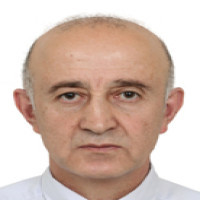






Ali Kilicarslan graduated from the Middle East Technical University’s Gaziantep Campus in 1989 with a Bachelor Degree in Mechanical Engineering. He received an Master of Science in Mechanical Engineering in 1994 and a PhD of Mechanical Engineering in 2000 from Istanbul Technical University. He is the Editor in Chief of Hittite Journal of Science and Engineering He is a Professor at the Department of Mechanical Engineering, Hitit University, Corum, Turkey, teaching Advanced Thermodynamics, Energy and Exergy Analysis of Thermal Systems, Thermodynamics, Refrigeration and Air Conditioning. His research areas are based on thermal systems, refrigerants and refrigeration systems, air-conditioning systems, heating systems, alternative and renewable energy systems, gas-fired pulse combustion, cogeneration and trigeneration systems, gas and vapor cycles, experimental and theoretical analyses thermodynamic cycles. He supervised 12 M.Sc. and 1 Ph.D. theses. He published 50 scientific papers in international journals and conferences and also published 26 scientific papers in national journals and conferences. He was Director of the Graduate School of Natural and Applied Sciences between the years of 2008 and 2017. He also served as a Dean of Engineering Faculty and Department Chair of Mechanical Engineering between the years of 2015 and 2021.
Associate Editors

Dr. Öncü Akyıldız is currently an Associate Professor in the Department of Metallurgical and Materials Engineering at the Hitit University. He completed his Ph.D. at the Middle East Technical University (METU), Ankara, Turkey, with his dissertation on modeling and computer simulation of microstructural evolution in polycrystalline thin films for microelectronics exposed to severe operating conditions. Dr. Akyıldız won the best dissertation awards in 2004 and 2011 by METU. After that, he joined the Department of Materials Science and Engineering at the University of Michigan as a postdoctoral visiting scholar, where he worked on modeling and computer simulation of microstructural evolution in phase separating positive electrodes for secondary lithium-ion batteries. His research interests cover the diffusion-controlled movement of solid surfaces and interfaces, computational thermodynamics, kinetics, and mechanics in materials modeling and simulation applied to directed energy deposition additive manufacturing.
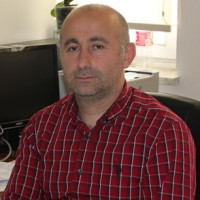
Dursun Ali KÖSE was born in Samsun Terme. He completed his undergraduate and graduate studies at Kars Kafkas University, Department of Chemistry, with his thesis titled "Synthesis of Nicotinamide and Diethylnicotinamide Complexes of Acetylsalicylates and Investigation of their Structures". Doctor title: Prof. Dr. He received his thesis title "Preparation and Structure Investigation of Biopotent Boron Compounds with Hydroxy-Functionalized Organic Molecules" at Hacettepe University, Department of Inorganic Chemistry, under the supervision of Birgül KARAN in 2008. Between 2009 and 2010, he worked as Research Assistant at Kafkas University, Department of Chemistry. See Dr. After working as an assistant at Çorum Hitit University, Department of Chemistry. Assoc. Dr. was appointed as. In 2010, for postdoctoral studies, Prof. Dr. It was found in Mike Becket's laboratories at the Bangor/Wales School of Chemistry. He received the title of Associate Professor at Hitit University in 2013 and the title of Professor at the same University in 2018.
Köse has around 140 scientific articles scanned by international indexes, around 90 papers presented at international conferences, and his studies on metal complexes and boron esters of biologically active ligands continue. He also has studies in the fields of Environment and Waste Management and Occupational Health and Safety.
Section Editors
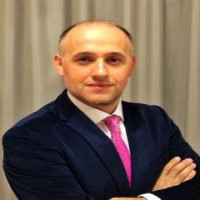
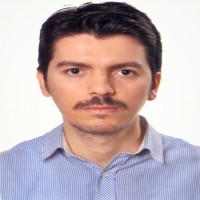
Dr. Akif AKGUL was born in Izmir, Turkey. Dr. AKGUL received his B.S. degree in Electronics-Computer Education from Kocaeli University in 2009 and in Electrical-Electronics Engineering from Sakarya University in 2013, M.S. and Ph.D. degrees from Sakarya University in 2011 and 2015, respectively, in Electronics-Computer Education and Electrical-Electronics Engineering. His Ph.D. thesis work was on chaos-based cryptology. He has been to The Institute of Electronics, Communications and Information Technology (ECIT) of Queen's University Belfast, United Kingdom in 2015 as a Visiting Researcher. His current research interests include random number generators, cryptology, data hiding, blockchain, IoRT, chaos-based engineering applications. Currently, he is Associate Professor at the Department of Computer Engineering, Faculty of Engineering, Hitit University, Turkey, where he has been involved in projects concerning the study of chaos-based applications.

Board of Editors
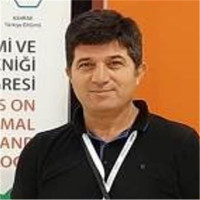

Yuehong Su is a Professor of Thermal Science and Building Technology at the Department of Architecture and Built Environment, University of Nottingham. He has over 30 years research experience in heat pump, air conditioning, adsorption/absorption/ejector cooling, desalination, energy efficiency, heat storage, solar concentration, PV/thermal, daylighting, natural ventilation and low carbon buildings. He has worked on a number of projects funded by the EPSRC, EU, Innovate UK, NSFC and industry and has published over 180 papers in refereed journals and conferences. He has been the supervisor/co-supervisor of over 30 PhD students and postdoctoral researchers. He teaches Engineering Thermodynamics, Air Conditioning Technology, Daylighting and Solar Architecture Modelling, and he is the Course Director for MSc Sustainable Energy and Entrepreneurship. Prof Su has recently supervised several Marie Curie International Incoming Fellowship projects and jointly managed one FP7 ICARUS project and several EPSRC and Innovate UK projects on sustainable energy technologies.

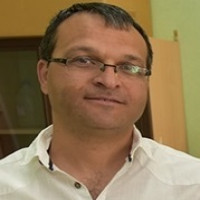
Prof. Dr. Adil Baykasoglu received his B.Sc., M.Sc. and Ph.D. degrees from Mechanical and Industrial Engineering areas in Turkey (Gaziantep) and England (Nottingham). He is presently a full Professor at the Industrial Engineering Department at the Dokuz Eylul University. He has published numerous academic papers, 3 books and edited several conference books on operational research, computational intelligence, engineering management, and manufacturing systems design. He is also an active editor and referee for many scientific journals.

Dr. Celebi is a senior researcher at TU Wien, working on the molecular-scale surface and interface physics related phenomena such as adsorption at interfaces, transport in nanochannels, coatings, adhesion, friction and so forth. He uses computational approaches at different time- and length-scales such as molecular dynamics, Monte Carlo, density functional theory, and finite element analysis. He received his PhD in mechanical engineering from Southern Methodist University, USA. His PhD thesis aimed to explore liquid transport in nano-scale confinements using molecular simulations. After his PhD, he worked as a postdoctoral researcher at Engineering Thermodynamics, TU Delft in Netherlands, focusing on the design, development and characterization of green solvents such as ionic liquids and deep eutectic solvents. Then, he joined Applied Interface Physics group in TU Wien as a computational-sub group leader.
Ali Elkamel – Biography
Ali Elkamel is a Professor of Chemical Engineering at Khalifa University and currently serves as the Acting Chair of the Department of Chemical and Petroleum Engineering. Prior to this role, he spent more than 22 years at the University of Waterloo in Ontario, Canada, where he is now a Professor Emeritus. His academic journey includes appointments at the University of Wisconsin–Madison, Kuwait University, Procter & Gamble, and Purdue University, where he completed his postdoctoral fellowship.
Prof. Elkamel holds a BSc in Chemical Engineering and a BSc in Mathematics from the Colorado School of Mines, an MSc in Chemical Engineering from the University of Colorado–Boulder, and a PhD in Chemical Engineering (with a specialization in Process Systems Engineering) from Purdue University – West Lafayette, Indiana.
His research focuses on computer-aided modeling, optimization, and simulation, with applications in energy production planning, carbon management, sustainable operations, and process design. His current interests lie in energy systems, renewable energy integration, digitalization of processes, and the use of Artificial Intelligence (AI) and data analytics to enhance efficiency and profitability in chemical and energy systems.
Prof. Elkamel is deeply engaged in academic and professional activities, including supervising graduate and undergraduate students, mentoring postdoctoral researchers, and contributing to university governance and service. He has been instrumental in initiating and leading international research collaborations with industry partners, national laboratories, and global research institutions.
He has supervised more than 75 master’s students, 50 PhD students (including 20 in academia), and over 35 postdoctoral fellows and research associates. Many of his former trainees hold influential positions in both academia and industry. Prof. Elkamel has led numerous research projects funded by government agencies and industry, and he has received several prestigious awards, including the Research Excellence Award, the Excellence in Graduate Supervision Award, the Outstanding Faculty Award, the Best Teacher Award, and the IEOM Distinguished Educator and Outstanding Service Awards.
He has authored over 475 journal articles, 195 conference proceedings, and 55 book chapters. He is also the co-author of seven books, including:
Carbon Capture, Utilization, and Storage Technologies (Springer)
Planning of Refinery and Petrochemical Operations (Wiley)
Chemical Product Design, Formulation, and Optimization (Wiley)
Environmentally Conscious Fossil Energy Production (Wiley)
Electric Vehicles in Energy Systems (Springer)
Beyond academia, Prof. Elkamel’s work continues to advance sustainability and innovation in energy and chemical engineering through strategic partnerships and impactful research.
Mohammad G. Rasul, PhD (He/his)
Professor in Mechanical Engineering (Clean Energy)
School of Engineering and Technology
Founder, Clean Energy Academy, CQUniversity
Leader, Fuel and Energy Research Group, CQUniversity
Leader, Biofuels and Waste Valorisation Program, Centre for Hydrogen and Renewable Energy, CQUniversity
Editor, Australian Journal of Mechanical Engineering
Section Editor: Encyclopedia of Renewable Energy, Sustainability and the Environment (Elsevier)
Editorial Board, Energies (MDPI)
Member, Mechanical College Board, Engineers Australia

Production Team


Hayati TÖRE graduated from Mechanical Engineering of Hitit University in 2012 (Çorum, Turkey). He received her M.Sc. degree from Hitit University Graduate School of Natural and Applied Sciences in 2015. He is currently a Research Assistant at the Department of Mechanical Engineering at the Hitit University, which he joined in 2019. In his master’s thesis, he studied "An experimental investigation of a heat pump operating in the cooling mode for different refrigerants". Currently, he is a Ph.D. student at Hitit University.His research interests are HVAC(heating, ventilating and air conditioning) Systems and Phase change in Condensation Phenomena.


Hittite Journal of Science and Engineering is licensed under a Creative Commons Attribution-NonCommercial 4.0 International License (CC BY NC).